The Signal-to-Decision Bridge: Making Strategic Foresight Operational
Strategic foresight becomes valuable when it changes the quality, timing, and ownership of executive decisions. VERTU’s perspective on turning emerging signals into governed action, resilient growth, and innovation with consequence.
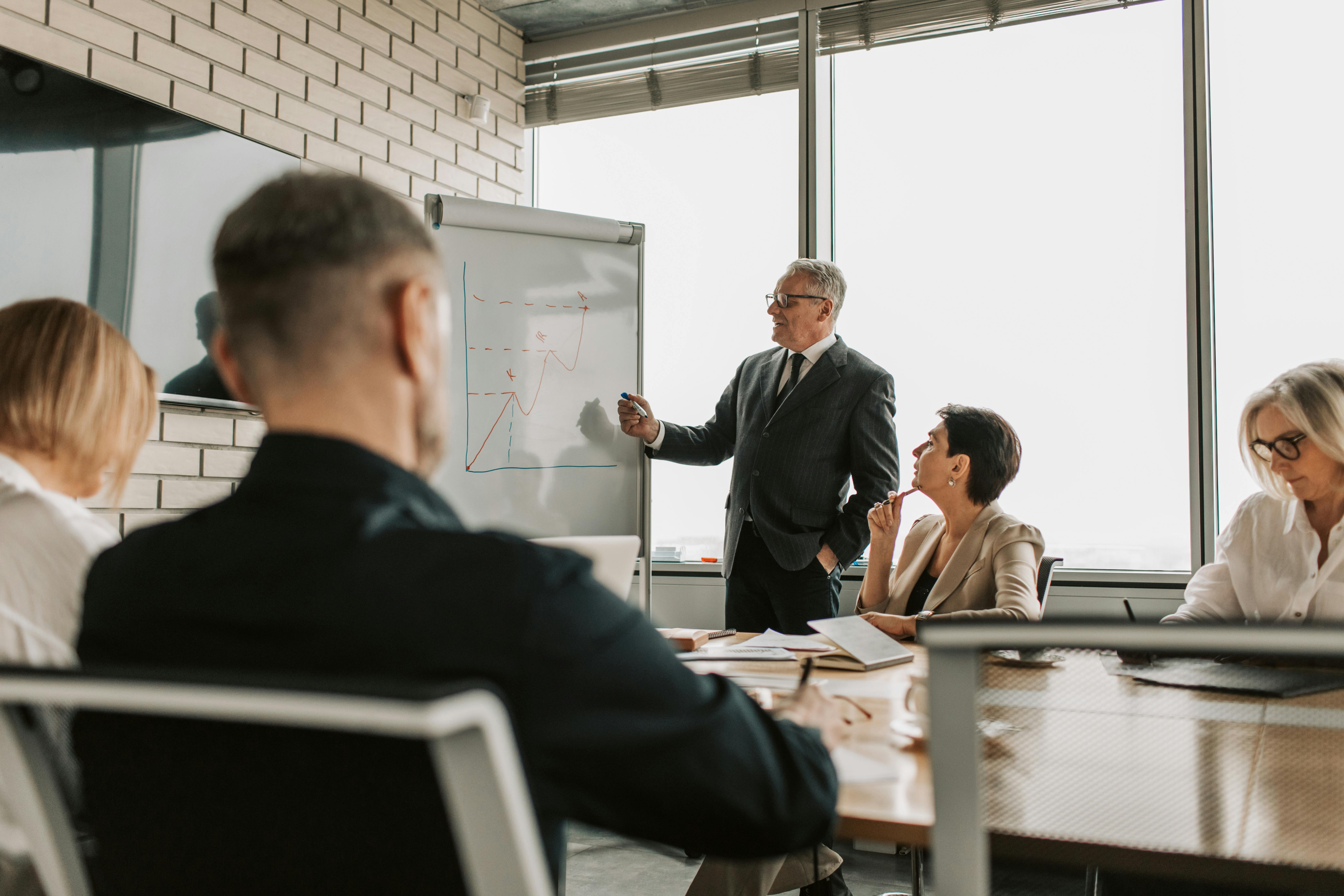
The most consequential leadership decisions rarely arrive with complete information. A new technology may still be immature. Customer behaviour may be changing before the data is conclusive. Regulation, climate exposure, capital costs, and geopolitical conditions may be moving in different directions at once. Yet boards and executive teams are still required to decide where to invest, what to protect, and which assumptions can no longer govern the business.
This is where strategic foresight earns its place. It is not a prediction exercise, and it is not a more elegant version of trend reporting. The OECD defines strategic foresight as a structured and systematic exploration of plausible futures, intended to help organisations anticipate and prepare for change. Its value lies in creating a better bridge between what leaders can observe today and what they may need to decide tomorrow.
For an enterprise, that bridge has three parts: signal, sense-making, and governed action. Without the first, leadership is detached from change. Without the second, signals become noise. Without the third, insight remains an impressive conversation rather than a source of performance.
From signals to significance
A signal is not automatically a strategy. An isolated technology announcement, a shift in customer preference, or an unexpected move by a competitor may be interesting without being material. The executive task is to establish whether a signal could alter the economics, expectations, capabilities, or legitimacy of the business.
A disciplined foresight process therefore asks more than "What is new?" It asks:
- Which changes are structural rather than temporary?
- Where could several developments converge and create a discontinuity?
- Which existing assumptions would become liabilities under a different future?
- What would customers, regulators, employees, and capital providers expect from us if that future emerged?
This is the difference between collecting trends and developing strategic intelligence. The purpose is not to create an exhaustive catalogue of everything that might happen. It is to identify the few developments that deserve senior attention because they could change the organisation's room for manoeuvre.
Future Today Strategy Group describes its role in similarly practical terms: helping leaders turn uncertainty into advantage and translating foresight into products, strategic directions, and investment decisions. The implication is important. Foresight should be judged not by the number of trends identified, but by the quality of the choices it enables.
The executive team needs a shared view of possibility
Transformation becomes difficult when different parts of the organisation are responding to different versions of the future. Finance may be protecting the current model. Technology may be preparing for a new infrastructure layer. Marketing may be following new behaviours. Operations may be optimising for today's demand. Each perspective can be reasonable in isolation, while the enterprise as a whole lacks a coherent direction.
Scenario work creates a common language without pretending that uncertainty can be removed. Rather than selecting one forecast, leaders examine several plausible conditions and consider how the organisation would perform in each. This makes hidden dependencies visible. It also allows teams to distinguish decisions that are durable across futures from decisions that should remain staged, reversible, or contingent.
The most useful workshop is not a theatrical exercise in imagining distant worlds. It is a structured leadership conversation about consequences. What would have to be true? Which capabilities would become essential? Where would the operating model break? Which investments would create resilience across more than one scenario? Which early indicators should trigger a review?
Qvest's public methodology reflects this applied orientation. Its strategic foresight offering combines scenario planning, trend research, co-creation, visual thinking, and backcasting to derive concrete fields of action and milestones. That sequence matters because it moves the organisation from possibility to responsibility.
Governance is the missing layer
Many innovation programmes fail not because the organisation lacks ideas, but because ideas are not connected to authority, capital, metrics, or time. A workshop may produce a compelling future vision, yet the annual planning cycle continues to reward only the existing business. The result is a familiar pattern: broad agreement in the room, followed by no meaningful change in the system.
Strategic foresight becomes operational when it is attached to a governance architecture. A board-ready approach should clarify:
| Governance question | What it makes visible |
|---|---|
| What are we trying to preserve? | The assets, trust, capabilities, and cash engines that must remain strong |
| What are we willing to explore? | The new markets, experiences, technologies, and business models worth testing |
| Who owns the decision? | The executive authority accountable for moving from insight to action |
| What evidence changes our position? | The signals, thresholds, and milestones that justify acceleration, pause, or exit |
| How will progress be measured? | The links between innovation activity, operating performance, sustainability, and growth |
This is not bureaucracy added to creativity. It is the condition that allows creativity to survive contact with the enterprise. Governance gives innovation a route into investment decisions and gives leadership a principled way to act before certainty arrives.
Innovation with consequence
For premium and globally exposed businesses, innovation cannot be reduced to novelty. It must improve the relationship between ambition and execution. A new proposition may open a revenue stream, but it also creates requirements for data, talent, partnerships, customer trust, risk management, and service continuity. A future-facing strategy must therefore connect the experience a company wants to create with the operating system required to deliver it.
This is particularly relevant as digital behaviours and immersive technologies reshape expectations in sectors built around experience. The strategic question is no longer simply whether a business should adopt a new interface or platform. It is whether the organisation is prepared to orchestrate physical, digital, human, and invisible layers of value without compromising its standards.
The same principle applies to sustainability. Sustainability goals are strongest when they are treated as strategic design constraints and sources of innovation rather than as a separate reporting exercise. A credible roadmap links future-facing investments to resource efficiency, resilience, customer value, and the economics of the operating model.
The standard is not a long list of initiatives. It is a coherent set of choices that a board can understand, a leadership team can own, and an organisation can execute.
What an executive foresight workshop should leave behind
A high-value workshop should produce more than inspiration. It should leave the leadership team with a sharper decision environment and a visible line of sight from external change to internal action. Depending on the strategic question, that may include:
- A signal map identifying the external developments most likely to affect the organisation's future position.
- A set of plausible scenarios that exposes assumptions, dependencies, risks, and opportunities.
- A future-state ambition expressed in terms of customer value, capabilities, culture, and business model.
- A prioritised set of strategic fields where the organisation should investigate, experiment, partner, or invest.
- A backcast roadmap with milestones, owners, evidence thresholds, and review points.
- A leadership compact defining how executives will make decisions when the evidence is incomplete.
The final item is often the most important. Transformation is not sustained by a document. It is sustained by a leadership team that has agreed how to interpret change, how to allocate attention, and how to make disciplined commitments without waiting for perfect visibility.
The VERTU perspective
At VERTU England, we see Strategic Foresight and Innovation Leadership Workshops as an executive growth and governance advisory, not a conventional training product. The setting is designed for leaders who need to see beyond immediate volatility while remaining accountable for near-term performance.
Our role is to help clients connect the external world to the decisions that shape their enterprise: where to place the next meaningful bet, which capabilities to build, which assumptions to retire, and how to align innovation with operational performance, sustainability goals, and new revenue models.
The outcome is not certainty. It is the vision and confidence to lead industry transformation - with a clearer understanding of what may change, what must be protected, and what the organisation can begin doing now.
The leaders best prepared for the future are not necessarily those with the most elaborate forecasts. They are the ones who have created a deliberate bridge from signal to significance, from significance to choice, and from choice to governed execution.